Your Password Is Only Half the Transaction. The Other Half Is the Company Holding It
Most password advice treats security as a test of personal discipline, but the party storing the credential decides more of the outcome than the person typing it.
Joaquin Salcedo·4 min read·927 words
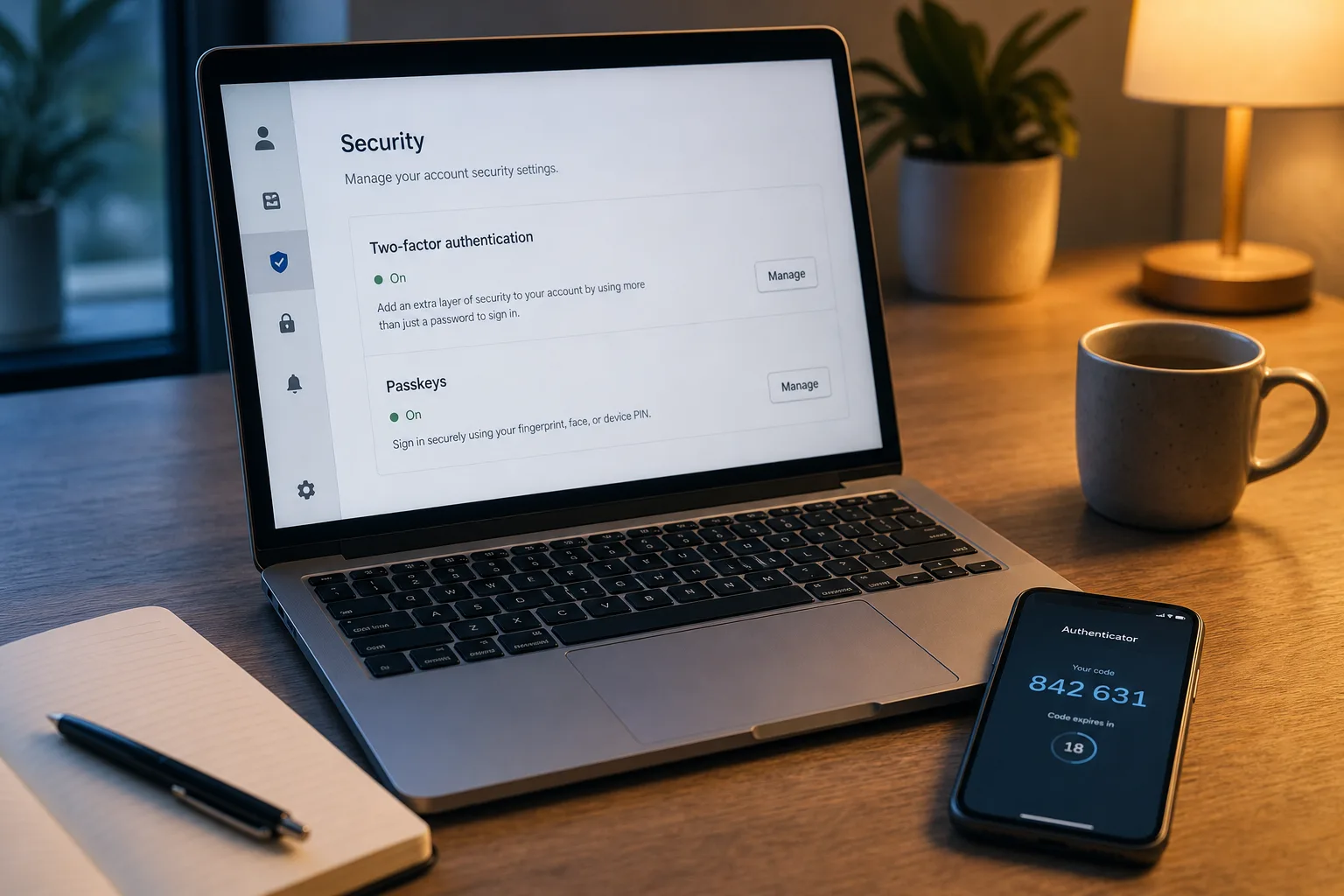
The advice most people absorbed about passwords was written as if security were a matter of personal hygiene: pick something hard, change it often, never write it down. That framing puts the entire burden on one party, the person at the keyboard, and it quietly assumes the other party is a neutral container. It is not. The company holding your credential makes a series of technical decisions about storage, rate limiting, recovery and disclosure, and those decisions determine how much a stolen password is worth to the person who steals it. Reading them is possible from the outside.
The assumption that strength lives entirely in your head
The old rules trained a specific reflex: one uppercase letter, one digit, one symbol, and a fresh version every quarter. What that produced, across tens of millions of accounts, was a predictable grammar of substitutions and increments, the capital at the front, the exclamation point at the end, the year bumped by one each spring. Attackers learned the grammar faster than users varied it. The National Institute of Standards and Technology, which is responsible for federal digital identity guidance, revised its recommendations away from forced complexity and scheduled rotation toward length, screening against known-compromised credentials, and leaving a password alone unless there is evidence of compromise.
The practical correction is smaller than it sounds. Length carries most of the weight, and a long passphrase you can actually recall outperforms a short string of punctuation you cannot. Uniqueness carries the rest. Reuse is the exposure that turns one unrelated breach into a chain of account takeovers, because credential stuffing works by taking a known email and password pair and trying it, automatically, against several hundred other services. A password that exists in exactly one place can only fail in one place.
The party nobody looks at when the breach letter arrives
When an account is compromised, the first instinct is to audit yourself: what did I click, what did I reuse, where was I careless. Often the answer is nothing, because the failure happened on a server you have never seen. Services store passwords in one of several ways, and the differences are enormous. A credential run through a modern, deliberately slow hashing function with a unique random salt is expensive to crack even after a database walks out the door. A credential stored unhashed, or hashed with a fast general-purpose algorithm, is readable at scale within hours. You never chose that, and it governs your outcome.
The same party controls the rest of the perimeter. Whether failed login attempts are throttled, whether logins from new devices trigger a notice, whether support staff can reset an account on the strength of a phone call, whether multi-factor enrollment is offered as an app code or a passkey rather than a text message: all of these sit on the company's side of the transaction. The useful mental shift is to stop thinking of a password as a secret you keep and start thinking of it as a secret you deposit, repeatedly, with institutions of varying care.
Signals you can read before you deposit anything
You cannot inspect a company's hashing scheme from the signup page, but several tells are visible without any technical access. A site that caps your password at sixteen characters, or forbids spaces and certain symbols, is often doing something with the raw string it should not be doing. A site that emails your existing password back to you during recovery is storing it in a form it can read, which means an intruder can read it too. A site that still forces a change every ninety days is running on guidance that the people who wrote it withdrew.
The favorable signals are just as legible. Support for passkeys, or for an authenticator app and hardware key rather than a code sent by text, indicates somebody is tracking current practice. A clear account activity log, a session list you can revoke, and a published security contact all suggest a team that expects to be told about problems. None of this is a guarantee, but it sorts the services that have thought about the question from the ones that have not, and it costs you about ninety seconds at the moment you are creating the account rather than the week you are recovering it.
Where your effort actually buys something
Given that the other party owns most of the technical outcome, your remaining leverage is concentrated and worth spending deliberately. Unique credentials everywhere, generated and stored by software rather than invented by you, means a failure at any single company stays contained there. Multi-factor authentication on the accounts that can reset other accounts, primarily your email and your phone carrier, blocks the most common escalation path, because those two are the recovery route for nearly everything else. Beyond that, the returns flatten quickly, and the energy people spend memorizing baroque strings is better spent on coverage.
Passkeys change the arithmetic further by removing the shared secret entirely. The private key stays on your device, the service holds only a public key, and a breach of their database yields nothing a thief can replay. Adoption is uneven, so passwords will remain in rotation for years, but every account you move is one fewer deposit with an institution whose storage practices you will never see.
Keep the audit habit, then, but point it outward as well as inward. The question is not only what you chose, but who is holding it, and how long they would take to tell you if it left.