Which Upkeep Jobs Are Worth Paying For? The Line Is Disturbance, Not Difficulty
Most households hire out the jobs that are tall, heavy or unpleasant, and keep the ones that put dust and spores into the air. A health-first look at where the line actually sits.
Joaquin Salcedo·4 min read·893 words
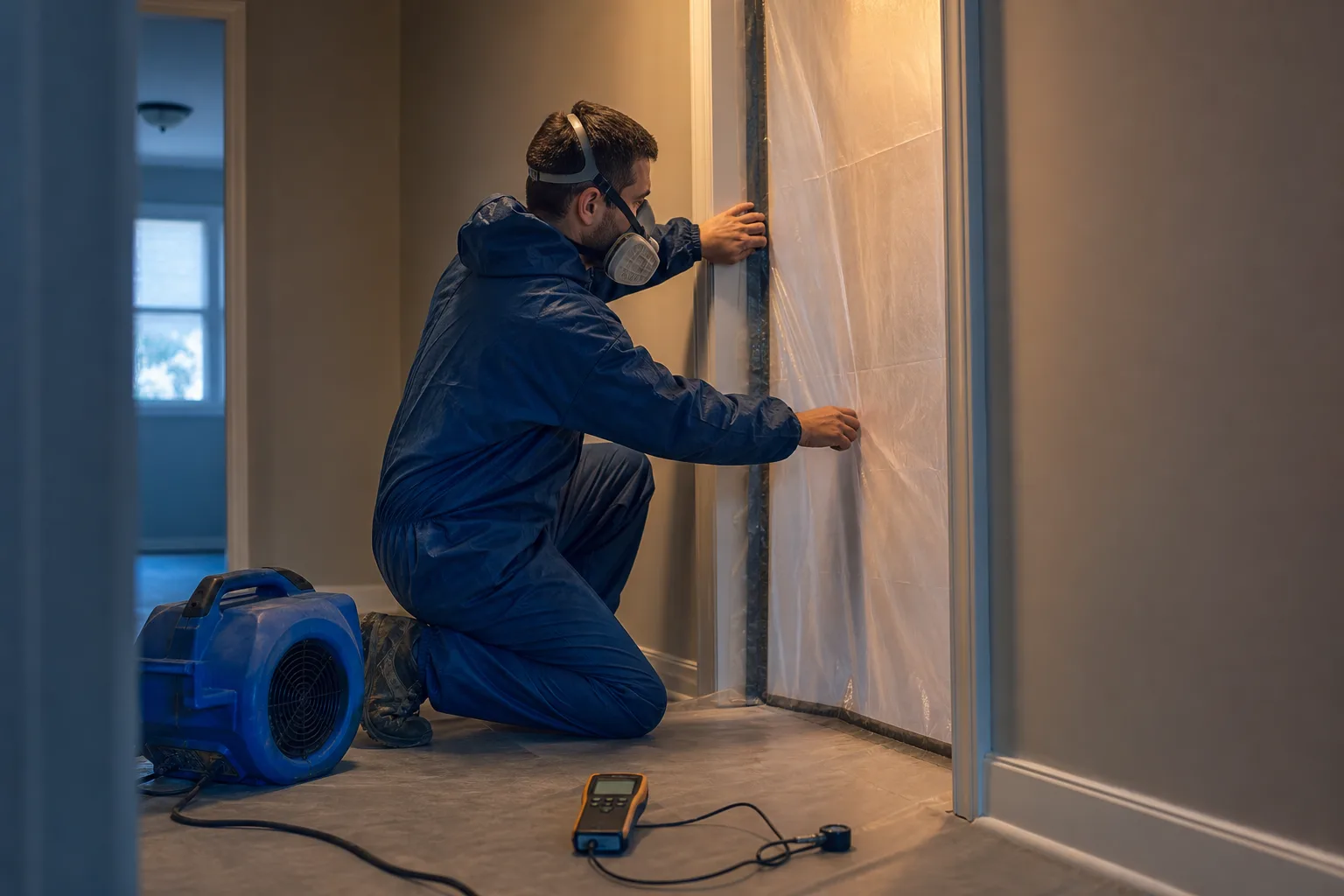
The usual rule households run on is effort. If a job is tall, heavy, filthy or tedious, it gets hired out, and if it is none of those things it stays on the Saturday list. That rule sorts gutters and window washing correctly and sorts almost nothing else correctly, because the variable that matters to your lungs is not how hard the work is but how much of what was sitting still ends up moving through the air you breathe for the next several days. A job can be easy, cheap and quick and still be the one worth paying a stranger to do.
Disturbance is the word doing the work
Dust, spores and old paint chips are not much of a problem while they stay put. They become a problem when something scrapes, sands, sweeps, blows or tears them loose in an enclosed room with the windows shut, which is the ordinary condition of a house in February. That is why a crawlspace inspection, which takes twenty minutes and requires no skill beyond a willingness to lie on gravel, belongs on the paid list, while scrubbing a shower does not. The question to ask before you start is simple: what is currently at rest here, and where will it go once I move it?
The Environmental Protection Agency is the federal body responsible for indoor air quality guidance and for the rules covering lead-safe work practices in older housing, and the distinction it draws is the same one a doctor draws. Exposure is a function of concentration and duration. A contractor with a negative-air machine, plastic sheeting and a fitted respirator produces a short, contained exposure for one person. You with a shop vacuum and a bandana produce a low, long exposure for everyone who sleeps there.
What the week actually looks like
The week-to-week reality is that almost nothing on your routine list is worth hiring out on health grounds. Counters, floors, dishes, laundry, bathroom surfaces, trash, the visible top layer of dust: none of that generates an exposure a physician would think twice about, and paying someone to do it is a time decision, not a health decision, which is a perfectly good reason to pay but a different reason. Where the weekly list does matter is as an early warning system. You are the one in the house often enough to notice that the hall closet has started to smell like a basement, that a window sill is beaded up every morning, that the same corner keeps needing a wipe.
Those observations are the trigger for the paid jobs, and they are the reason a household that cleans its own house is usually better positioned than one that does not. Someone paid by the hour to clean around your things will not tell you that the drywall behind the toilet has gone slightly soft. You will feel it with a thumb.
The vocabulary on the estimate is not decoration
Three words show up on quotes for what sounds like the same job, and they describe genuinely different scopes with different prices and different protections. Cleaning means the surface is wiped and the material stays in the building. Remediation means the affected material is removed under containment and the cause is addressed, which is why a mold remediation estimate that says nothing about where the water came from is an incomplete estimate rather than a cheap one. Abatement is the regulated term, used for lead and asbestos, and it carries licensing and disposal requirements that a general handyman cannot legally satisfy.
If a company offers to clean mold, ask what happens to the porous material, and if the answer is that it will be treated and left in place, you are buying a cosmetic result. That may be the right purchase in a garage. It is rarely the right purchase in a bedroom wall.
The short list that reliably earns the fee
Four categories come up again and again. Anything involving standing water or wet building materials, because drying is measured with a meter rather than judged by touch, and because the window before growth starts is short. Anything that sands, scrapes or cuts painted surfaces in a house built before 1978, where the certified-renovator requirement exists precisely because the dust is the hazard. Anything in a crawlspace, attic or sealed mechanical space, where the air is not shared with the rest of the house until you open it up and make it shared. And anything that requires a respirator to do properly, on the grounds that a respirator you have not been fit-tested for is closer to a costume than to equipment.
Buying these well is mostly about sequence. Ask how the work area will be isolated, whether the HVAC system will be shut down and its returns covered, how debris leaves the building, and when the house will be reoccupied. Then arrange to be somewhere else while it happens, which is the cheapest protective measure available and the one people skip because they want to watch.
The pattern that holds up over years is a household that keeps the routine work, watches the same rooms closely enough to notice a change, and spends its money on the handful of hours when something buried gets opened. That division costs less than hiring out the visible chores and protects more.