Throwing Out Produce Every Sunday? What the Bin Tells You About Your Grocery Bill
A three-person household kept notes on everything it discarded for six weeks. The pattern that emerged changed the shopping, the fridge and, unexpectedly, the air in the kitchen.
Joaquin Salcedo·5 min read·1,112 words
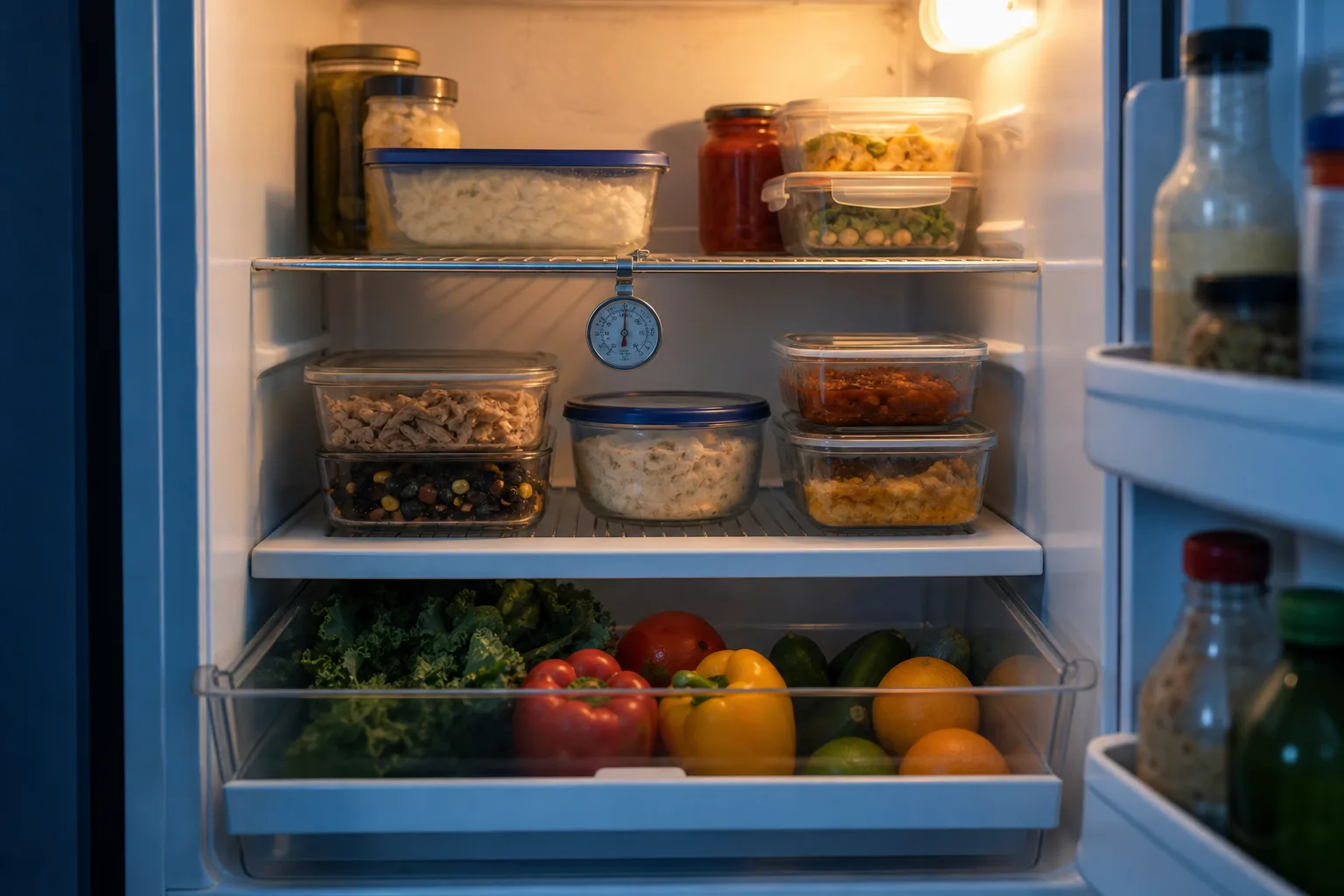
The household in question is three people in a rented duplex, two adults working staggered shifts and a teenager, and they agreed to do something modest for six weeks: write down everything that left the kitchen as garbage rather than as food. Not weigh it, not photograph it, just note it on a sheet taped inside a cabinet door. What they expected to find was carelessness. What they found instead was a schedule, a repeating weekly shape to the discards that had almost nothing to do with willpower and quite a lot to do with when they shopped, how cold the refrigerator actually ran, and which container a leftover went into on a Tuesday night.
Six weeks of notes, and the pattern nobody expected
The sheet filled up unevenly. Monday and Tuesday were nearly blank; Saturday and Sunday carried most of the entries, and the entries repeated. Salad greens, twice a week, most weeks. Half a bunch of cilantro. Bread heels. A container of cooked rice that had been pushed to the back of the middle shelf on Wednesday and rediscovered on Sunday. Yogurt past its date. What the sheet made visible was not a series of individual failures but a cycle: food bought on Saturday for an idealized week, consumed enthusiastically through Tuesday, then abandoned as the week's actual schedule reasserted itself and someone worked late or ate out.
That distinction matters because the two problems have different fixes and different prices. Carelessness, if that were the cause, would call for discipline, which is unreliable and free. A purchasing cycle mismatched to an eating cycle calls for a change in cadence, which is reliable and costs a second short trip, or an accepted shift toward items that survive a bad week. The household did not know which it had until the notes accumulated. Six weeks is roughly the minimum before a pattern separates itself from a run of unusual weeks, and the sheet was cheaper than any app.
Where the cost actually sits, and it is not the big items
Almost nothing expensive was thrown out. No roast, no whole fish, no cut of meat. The waste was concentrated in the cheapest per-unit categories, fresh produce, dairy, prepared leftovers and bread, which is exactly why it went unnoticed for years. A head of lettuce feels like nothing on its own. The tally is the point: a bagged salad twice a week, herbs bought whole for a recipe needing a tablespoon, milk sized for a family that drinks it in coffee only, and the arithmetic starts to approach a meaningful fraction of the weekly grocery run without ever producing a single moment that registers as an expensive mistake.
The second cost driver was bulk pricing, and this one is genuinely counterintuitive. The larger package is cheaper per ounce only if the entire package gets eaten, and for perishables in a three-person house with an irregular schedule, the effective price of the big container of spinach was higher than the small one because a third of it was never food. The household did not stop buying in bulk. They moved the practice to shelf-stable goods, rice, dried beans, canned tomatoes, paper products, where the discount is real, and paid the smaller-size premium on anything with a clock running on it.
The spoilage a doctor would actually flag
Here is where the notes turned into a health conversation rather than a budget one. Visible mold on food is a food safety question, and the practical rule most clinicians and food safety agencies converge on is that firm, dense foods can sometimes be trimmed well below a spot, while soft and moist foods, soft cheeses, yogurt, cooked grains, bread, berries and anything with high water content, should go, because the growth is not confined to what you can see. The Food and Drug Administration is the federal body responsible for food safety guidance of this kind, and their orientation is consistent: the visible colony is the smaller part of the problem.
The exposure a doctor tends to care about more, though, is not swallowed. It is inhaled. A crisper drawer with rotting produce in it, a bin that sits under the sink for four days in July, a refrigerator with a failed door gasket that stays damp inside, all of these are small, warm, persistently moist environments producing spores and volatile compounds a few feet from where people breathe. For most adults that is unpleasant and no more. For someone with asthma, an allergy to molds, or an immune system suppressed by treatment or medication, repeated exposure at close range to actively decomposing food in an enclosed kitchen is worth removing, and it is one of the more easily removed exposures in a house.
The household bought a refrigerator thermometer, which cost less than a sandwich, and found the unit running warmer than the dial claimed. That single reading explained a good share of the sheet. Milk turning early, greens collapsing in four days rather than eight, leftovers going off before anyone was negligent. Adjusting the setting, clearing the crowded top shelf so air could move, and wiping down the drawer where the previous produce had leaked did more for both the discards and the kitchen smell than any resolution about meal planning ever had.
The habits that survived past week six
Three changes stuck, and they stuck because none of them required remembering anything. The first was a designated shelf at eye level where anything opened or cooked goes, so nothing needs rediscovering. The second was splitting the shop, a large trip for staples and a ten-minute stop midweek for perishables, which converted a five-day gamble into a two-day one. The third was cooking a deliberate half portion of rice or pasta on weeknights rather than a generous one, on the reasoning that a leftover only saves money if someone actually eats it, and in this house nobody reliably did.
What the changes cost was small and mostly one-time: a thermometer, a set of clear containers so the contents are visible without opening anything, and about twenty extra minutes a week standing in a store. Against that, the sheet in weeks five and six was noticeably shorter than in weeks one and two, and the entries that remained were the genuine ones, the ingredient bought for a recipe that got canceled, the thing nobody liked.
The notes are gone now; the cabinet door is bare. The habits held anyway, which is the useful finding. Six weeks of writing things down bought the household a permanent read on its own week, and the fixes it pointed to were cheap, physical and mostly invisible once installed.