Signing a Scope of Work? The Reader Nobody Names Decides How the Finish Turns Out
A cabinet refinishing job went sideways over one undefined word, and the fix was writing the scope for the person who would actually do the work.
Hilde Brekke·4 min read·936 words
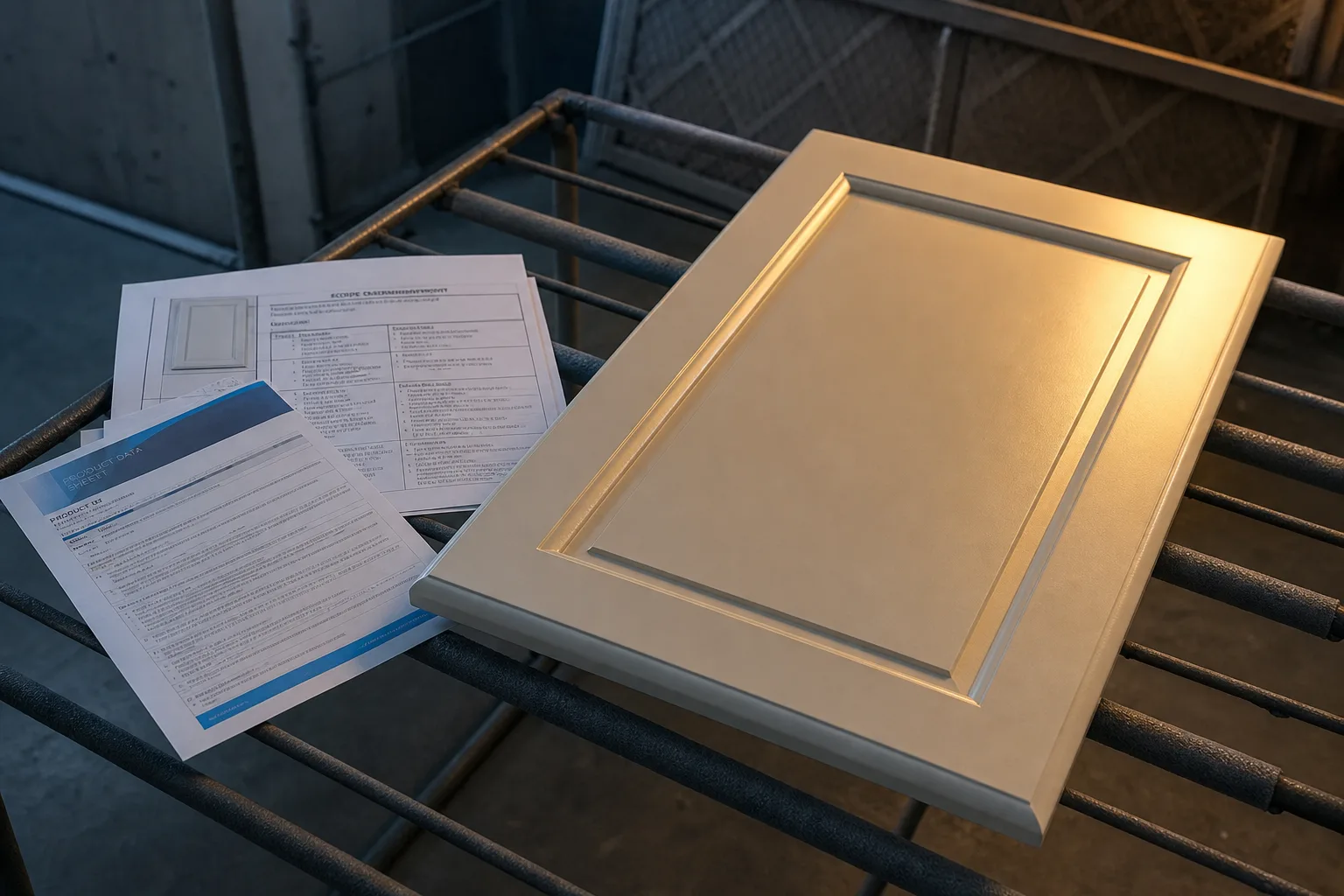
A refinishing job on thirty-eight cabinet doors came apart over one word, and the word was clean. The scope said the doors would be cleaned, sanded and sprayed with a waterborne acrylic in a satin sheen, which sounds like an instruction until you ask who decides when clean has been achieved. The design firm meant degreased to bare, dull film. The finisher who actually held the gun meant wiped down. Both were reading the same sentence in good faith, and the doors came back with adhesion failure along the rails within four months of normal kitchen use.
What the document said, and what the job needed it to say
The two pages covered price, payment schedule, a start window, an allowance for hardware and a line about protecting adjacent surfaces. Everything a lawyer would look for was present. What was absent was any statement of process at the level a person performs it: no degreaser named, no grit sequence, no requirement that the doors be sprayed off the box on horizontal racks, no bonding primer specified over the factory conversion varnish. The homeowner had approved a color and a sheen. Nobody had approved a method, and the method is what fails or holds.
When the dispute went to a walkthrough, the argument turned on whether the failure was workmanship or a product defect, and neither side could answer because the record did not exist. There were no product data sheets attached, no note of ambient temperature or humidity during application, no recoat window written down. The eventual repair worked, and it worked because the second scope, drafted after the fact, ran four pages and described the job as a sequence of verifiable steps rather than a description of a result.
The party most people never write for
Owners write scopes for the firm they hired. Firms write scopes for the owner who is signing. Almost nobody writes for the person who will read the document at seven in the morning with no memory of the conversation that produced it, because that person was not in the room. On this job the finisher was a subcontractor booked eleven days out, handed a job number and a color code. He had never spoken to the designer. Every assumption the two principals shared, and therefore never wrote down, evaporated at the point of contact with the work.
That is the practical test of a scope: hand it to a competent stranger and ask whether they could execute it without calling anyone. If they would have to call, the scope is a summary of a conversation rather than a set of instructions, and the conversation will not be available when the question arises. The rewrite passed that test. It named the degreaser, the grit progression, the primer, the number of coats, the flash time between them, and the fact that doors were to be finished flat and cured on racks before rehanging.
Acceptance, viewing conditions, and who signs off
The second document did something the first did not: it stated how the finished work would be judged. Cabinet doors were to be inspected at a stated distance, in the room's own lighting, at eye level, with the assessor standing square to the face rather than raking a flashlight across it. Sheen was specified by the manufacturer's published gloss value for the product, not by the word satin, which shifts meaning between brands. Measurement of gloss and color ultimately traces back to the national standards that the National Institute of Standards and Technology is responsible for maintaining, which is why naming a value beats naming an adjective.
It also named a decision-maker. One person, identified by role, with authority to accept a door or reject it, and a stated period after substantial completion in which the punch list would be assembled once rather than in rolling installments. That single provision removed most of the friction from the repair. The crew knew what would be looked at, when, and by whom, and they finished the last eight doors to a visibly higher standard because the target had stopped moving.
Which flaws matter and which are only cosmetic
A scope that treats every imperfection as equal produces either an unbuildable price or a demoralized crew. The defects that matter are the ones that predict failure: adhesion loss at edges and rails, sags and runs that indicate a film applied too heavily to cure through, grain telegraphing where filler was skipped, and any softness in the film weeks after application. Those are process defects and they get worse. A single nib in the finish on the inside face of a door under the sink is a different category entirely, and pricing it as though it were the first kind serves nobody.
Good scopes make that distinction explicit, in writing, before anyone starts. They say which conditions constitute rejection and rework at the contractor's cost, and which are acceptable variation in a hand-applied finish on site. The homeowner who understands the difference argues less and gets more, because the objections carry weight when they are raised. Judgment here is learnable: look at a finish you already own, in ordinary light, and sort what you see into things that will still be there in five years and things that only your flashlight found.
The rewritten scope cost an afternoon and a phone call to the coatings rep, and it is the reason the second attempt has held. Before you sign, read the document once as the owner and once as the stranger who will perform it, and fix every sentence that only survives the first reading.