The Remediation Ran Past Its Date. How to Price the Week You Spend Waiting
When a moisture or mold job blows its completion date, the choice to settle turns on what each further week costs you in lodging, health exposure and billable hours.
Joaquin Salcedo·4 min read·936 words
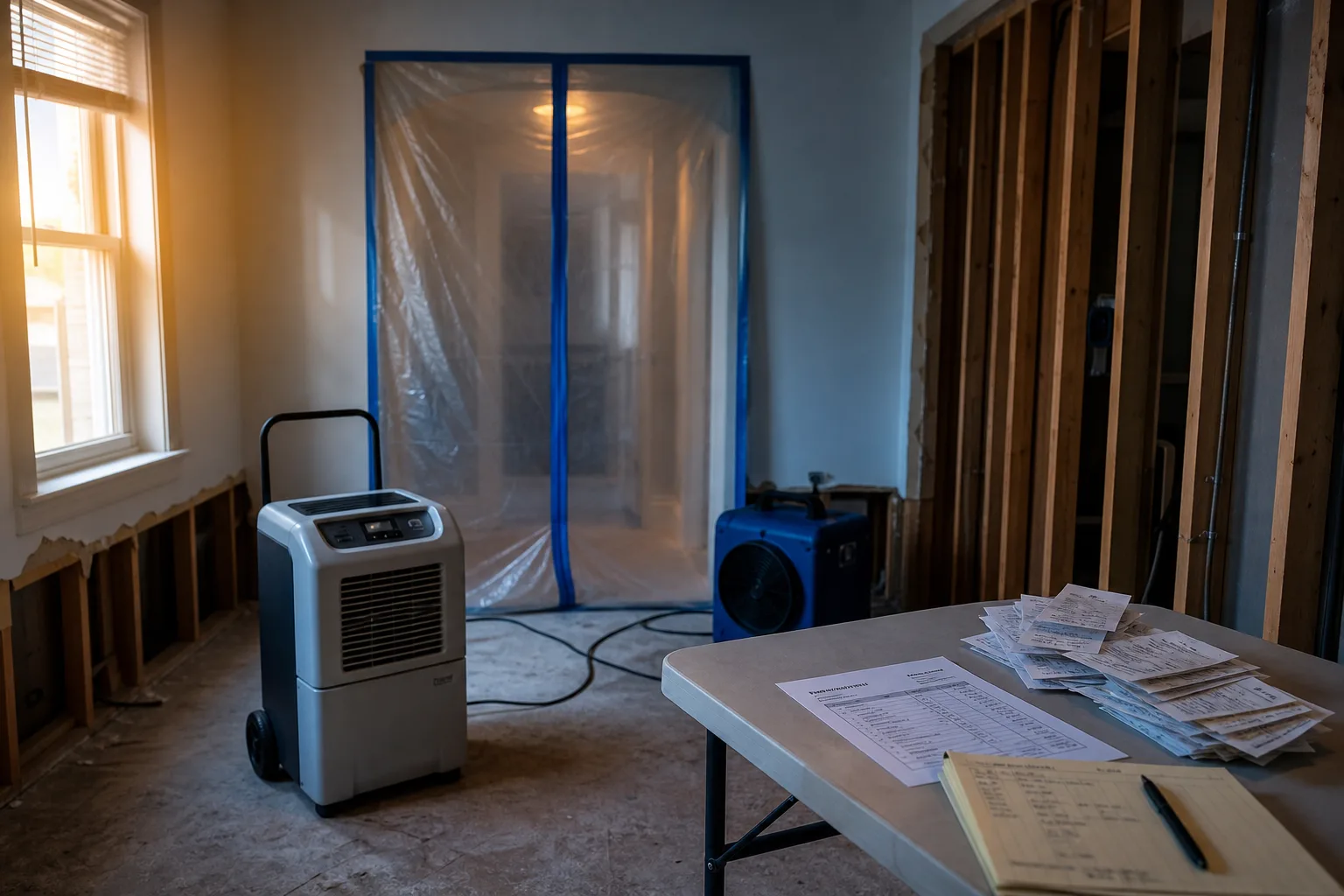
A completion date in a remediation contract is not a promise so much as a hinge. Before it passes, almost every conversation with the contractor is about scope and sequence, and after it passes the conversation quietly becomes about money, because someone is now absorbing the cost of a house that cannot be fully occupied or fully used. Most homeowners notice the shift about ten days late, when the second week of a hotel bill arrives and the dehumidifier is still running in a room nobody sleeps in. That is the week to start pricing the dispute rather than arguing it.
The meter that starts the day the date passes
Break the delay into what it actually spends each week, in the ordinary sense of receipts you can hold. Lodging or a rented room if anyone has moved out, restaurant meals because the kitchen is sheeted in plastic, equipment rental if you took over the air scrubber or the dehumidifier when the crew stopped returning, storage for the contents pulled out of the affected rooms, and the hours you lose sitting at home waiting for a truck that does not come. Add the utility cost of running drying equipment, which is not trivial on a residential meter. That weekly figure is the single most useful number you will build, and almost nobody builds it.
The reason it matters is that it converts an open-ended grievance into a rate. A dispute that costs you a defined amount every seven days has a natural expiration, and you can calculate roughly when holding out stops paying for itself. If your weekly carry is modest and the amount in dispute is large, waiting is cheap and patience is rational. If the carry is heavy, the arithmetic flips fast, often within a month, and settling for less than you believe you are owed becomes the cheaper outcome even when you are plainly in the right.
Which exposures a doctor would actually weigh
The health side of a stalled remediation is not uniform, and treating every delay as equally urgent will cost you leverage you might have spent well. What a physician tends to care about is who is breathing what, and for how long. Persistent dampness and visible mold growth matter most for people with asthma, chronic respiratory disease, infants, and anyone immunocompromised; for those households a delay is not an inconvenience but a reason to relocate and document the relocation. The Environmental Protection Agency oversees federal guidance on indoor mold and moisture, and its consistent position is that the fix is drying and source repair rather than testing for its own sake.
Two other exposures deserve a harder line than dampness. Solvent fumes from adhesives, sealers and coatings applied in a poorly ventilated space produce real, acute symptoms, and combustion byproducts from gas-powered equipment run indoors are a genuine emergency rather than a complaint. Silica-bearing dust from cutting concrete, tile or drywall compound without containment is the kind of exposure a physician would ask about years later. If any of those are in play, the calculation changes: you are no longer weighing convenience against principle, and the case for moving out and settling quickly gets much stronger.
What arguing costs, per hour and per report
The other side of the ledger is the cost of continuing to fight, and it is more predictable than most people expect. Attorney time in a residential construction or habitability dispute is billed hourly in most markets, and the first meaningful expense is not the trial anyone imagines but the letters, the calls with the other side's counsel, and the review of your own photographs and texts. Beyond that, a contested moisture case usually needs an independent opinion, which means an industrial hygienist or a licensed remediation consultant writing a report you can hand to someone else. That report is the expensive document, and it is also the one that most often ends the argument without a filing.
Set those costs against the amount genuinely in dispute before you commission anything. The honest version of this exercise often shows that the gap between the parties is smaller than the combined cost of proving who is right, which is not a defeat but useful information arriving early. Where the expert report is worth buying is when the contractor disputes the underlying condition rather than the price, because a condition is a factual question that a qualified third party can close.
Building the number you would actually accept
A settlement figure should be assembled from four parts, each with paper behind it. The unpaid balance you are still holding, which is your strongest lever and should never be released early. The cost to complete, taken from a written estimate by a second contractor who has walked the job. Your documented displacement costs to date, receipts attached. And a defined allowance for the remaining weeks of carry, calculated from the weekly figure you built at the start. Present it as arithmetic rather than as a position, and most of the emotional argument falls away.
Then set a date of your own and tell them what happens after it. A stalled job usually restarts, or resolves in a check, within a week or two of the moment the homeowner stops negotiating scope and starts naming a number with a deadline attached to it.
The week the bill arrives is also the week the decision gets easier, because the receipts do the arguing. Price the delay, weigh who in the house is breathing what, and settle at the point where another week of being right costs more than being finished.