Hiring Someone to Test Your Air? What Separates a Real Assessment From a Plausible One
A first-timer's guide to hiring an indoor air or mold consultant, and the specific things a good assessment does that a barely adequate one only appears to do.
Joaquin Salcedo·5 min read·1,192 words
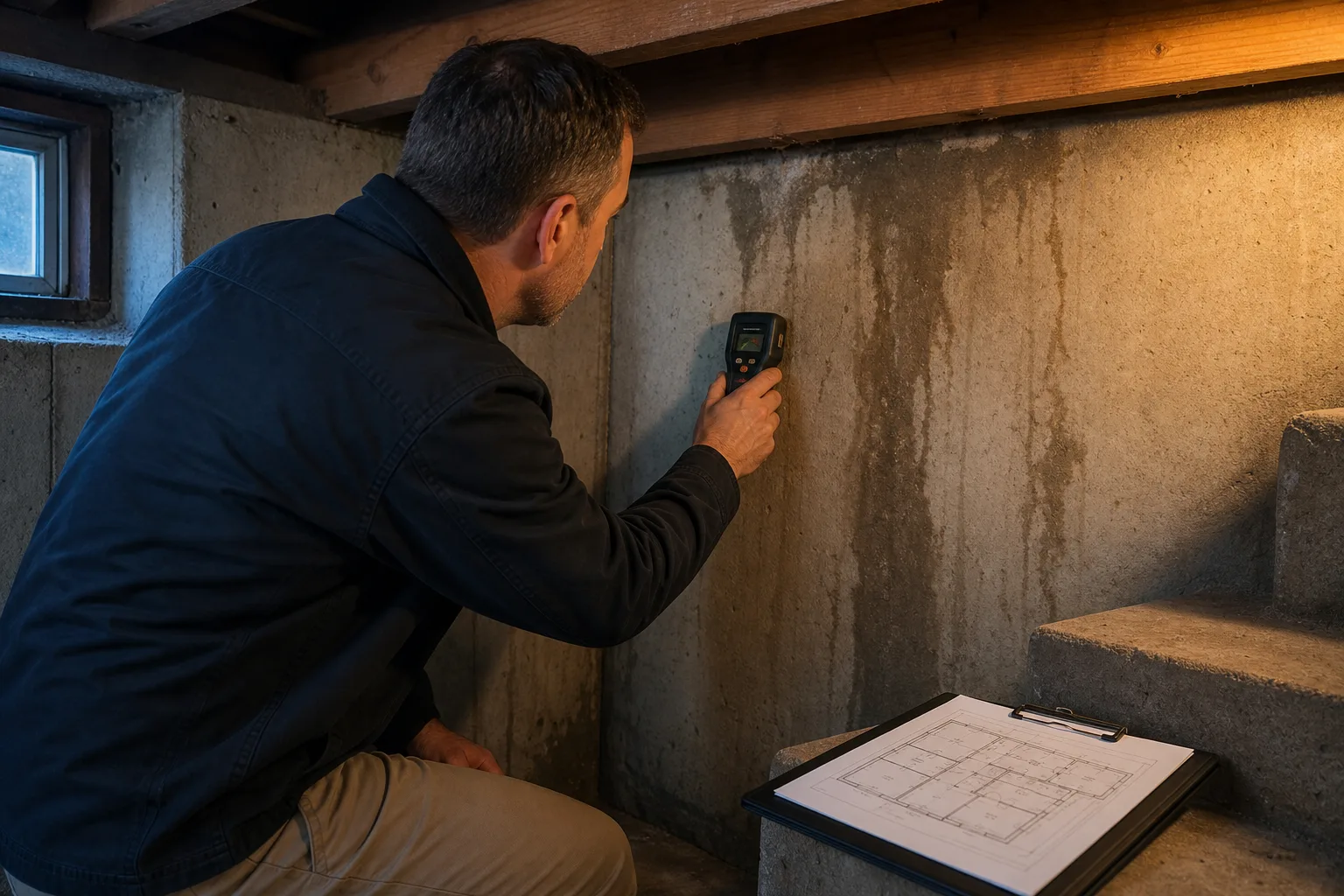
The call usually gets made after something else fails. A basement smells earthy after a wet spring, a child's cough gets worse in one bedroom and better at a grandparent's house, a contractor opens a wall and finds staining nobody expected. At that point most people search for someone who tests, and the results come back full of firms who all sound equally confident. The difficulty for a first-time buyer is not finding a provider. It is that a barely adequate assessment and a genuinely useful one look nearly identical from the outside, right up until you try to act on the report.
The word test is doing more work than it should
Nearly every listing offers testing, and the term quietly promises a laboratory answer to a building question. Air sampling and surface sampling produce numbers, and numbers feel like proof, but what they measure is what was present at one location during a short window on one day, under whatever conditions the house happened to be in. A good assessor treats sampling as one instrument among several, subordinate to a visual and moisture investigation. A weaker one leads with sampling because it is fast, repeatable, and easy to bill. When you first call, ask what the person expects to learn from a sample that they could not learn by looking, and listen for whether the answer is specific to your house.
The parallel language problem is inspection versus assessment. An inspection tends to mean a walkthrough with a report of observations. An assessment, in the way industrial hygienists and experienced indoor environmental consultants use it, means identifying the moisture source, defining the extent of affected material, and writing a scope that a remediation contractor can price and a homeowner can verify afterward. Both are legitimate services. They are not the same purchase, and the first-timer who buys the first while needing the second finds out weeks later, standing in a room that was cleaned but not fixed.
What a doctor would actually want to know
Exposures inside houses fall into rough categories, and they are not equally worrying. Persistent dampness matters because it drives everything downstream: mold growth, dust mite populations, bacterial growth in standing water, and the breakdown of materials that then shed particles. Combustion products matter for a different reason and on a different timescale, because carbon monoxide from a cracked heat exchanger or an improperly vented water heater is an acute hazard rather than a chronic irritant. Solvent and adhesive fumes during a renovation matter mostly for the days they are present and the ventilation available. Old paint and old flooring raise lead and asbestos questions that are governed by their own rules and their own certifications entirely.
The reason to sort exposures this way before hiring anyone is that it tells you which specialist you actually need, and it tells you when the answer is a physician rather than a consultant. A clinician evaluating a cough wants to know what the person is breathing, how long they have been breathing it, and whether symptoms track with the building. That is answerable with a good moisture map and a timeline. It is rarely answerable with a spore count, and a firm that offers to interpret sample results as a health diagnosis has stepped outside what the sampling supports. The Environmental Protection Agency is the federal body responsible for indoor air quality guidance, and the durable point in that guidance is that fixing the water problem and removing the growth matters more than measuring it precisely.
Independence is a structural question, not a character question
The single most consequential hiring decision for a first-timer is whether the person who assesses the problem also profits from the remediation. This is not an accusation about anyone's honesty. It is that an assessor who sells cleanup work is answering a question whose answer determines their own next invoice, and the incentive runs one direction. Several states regulate this separation explicitly for mold work, requiring that the assessor and the remediator be different parties on the same job. Where your state does not require it, you can require it yourself in writing, and a good firm will not flinch when you ask.
The practical test is easier than reading statutes. Ask directly whether the firm performs remediation, whether it refers to affiliated companies, and whether it will perform the post-remediation verification on work it recommended. Ask how it is compensated: a flat assessment fee is a different arrangement from a fee waived if you sign a cleanup contract. Firms built around independent assessment answer these questions immediately and often volunteer them, because the separation is the product they are selling. That fluency, more than any credential on the wall, is the signal a first-time buyer can actually read.
Judge the deliverable before you buy it
Ask to see a sample report with the client details removed, and read it as the person who will have to use it. A useful report names the moisture source rather than describing conditions, states the extent of affected material in square feet and by location, distinguishes what was observed from what is inferred, and specifies containment and clearance criteria in language a remediation contractor can bid against. It includes photographs tied to locations and moisture readings tied to a floor plan. A barely adequate report is mostly laboratory printouts, a page of general information about mold, and a recommendation to consult a qualified professional, which is what you thought you were doing.
Two more things belong in that sample. The first is a clear statement of limitations: what was not accessed, what was not opened, what the findings do not cover. Honest limitations are a mark of quality, because they tell you where the remaining risk sits and what a follow-up visit would cost. The second is a verification step. A good engagement defines in advance what will be checked after the work is done, by whom, and against what standard, so the job has a defined end rather than a vague sense that things smell better. That definition is what turns a report into leverage with a contractor, an insurer, or a landlord.
What the first hour should sound like
Bring a timeline rather than a theory. When the smell started, which rooms, which weather, what work was done recently, who in the household has symptoms and where those symptoms ease. Bring the utility bills if humidity is in question and the roof or plumbing history if water is. A capable assessor will spend real time on that history before touching a meter, will walk the exterior grade and the gutters, and will look at the mechanical systems, because dampness is usually a building performance problem wearing a biological costume. If the person you hired does those things in that order, you have bought the thing you meant to buy.
Keep the scope document, the photographs, and the verification results together in one folder. They are what you will hand to the next contractor, the next buyer, or the next physician who asks what exactly was in the house and what was done about it.