First Time Reading Labels for a Health Reason? The Front of the Box Is Not the Part That Counts
A clinical dietitian's working method for a newly diagnosed shopper: which front-of-pack wording is regulated, which is decoration, and the paperwork that makes the aisle manageable.
Joaquin Salcedo·4 min read·1,015 words
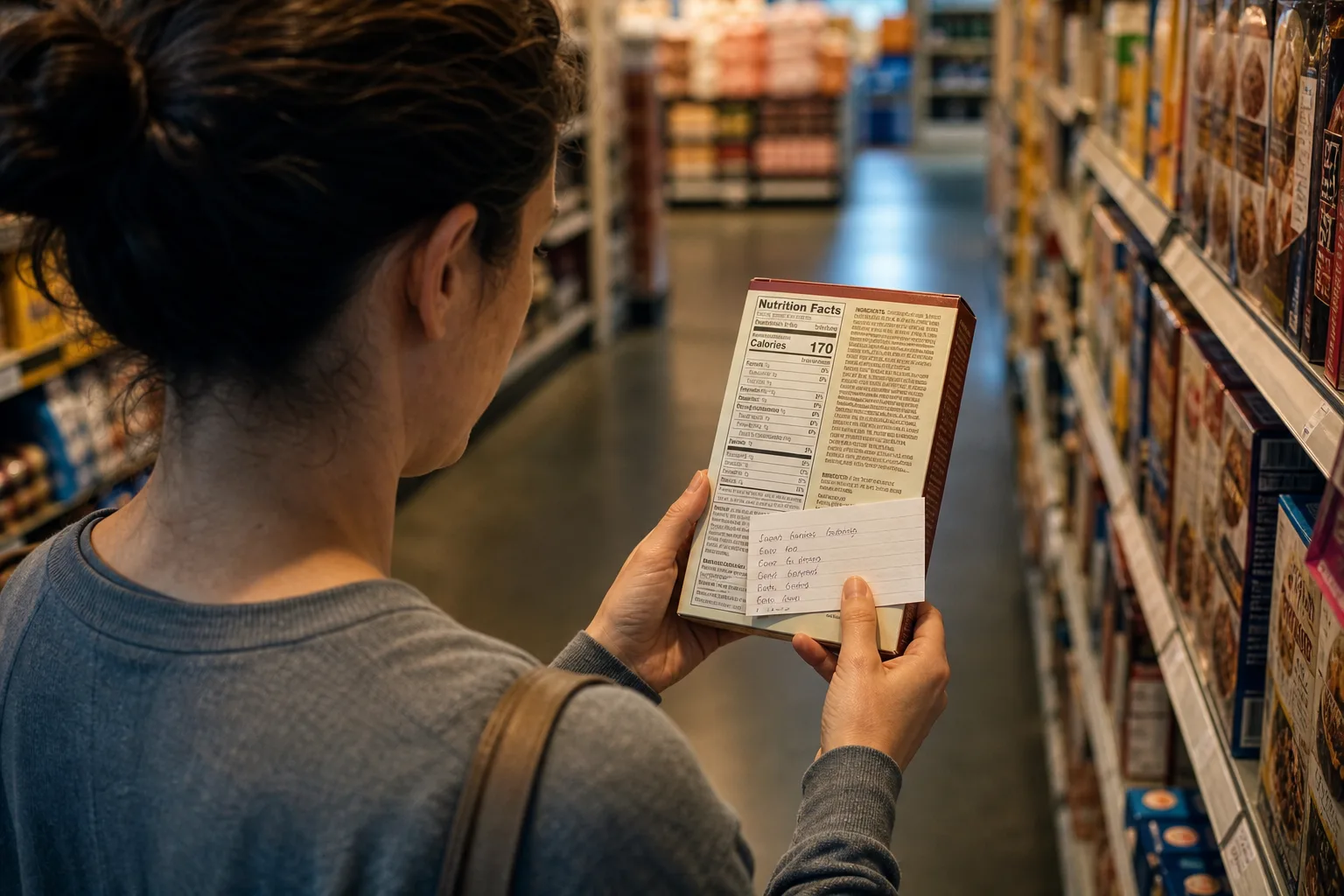
The people who arrive at a dietitian's office having just been told to cut sodium, or added sugars, or saturated fat, tend to arrive with the same object in hand: a box, usually a cereal or a cracker, with four or five reassuring phrases printed on the front. They want to know whether the box is lying. That is almost never the useful question. I spent an afternoon with a clinical dietitian who takes referrals from primary care and cardiology, working through what she teaches a first-time label reader in a single session, and the striking thing was how little of it involved judging the front of a package at all.
Two surfaces, two different sets of rules
Her opening move with a new patient is to separate the package into the part that is specified and the part that is designed. The Nutrition Facts panel and the ingredient list are regulated disclosures; the Food and Drug Administration oversees food labeling, and the format, the ordering, and the defined nutrient terms are not left to the manufacturer's discretion. The front of the box is where the company gets to speak in its own voice. Some of what it says there is defined, some of it is loosely constrained, and some of it means only that someone chose to print it, which is a distinction a nervous first-timer cannot see by looking.
The practical consequence is a habit rather than an opinion. She asks patients to turn the package over before reading anything on the front, on the theory that whatever the front says will color how you read the numbers if you take it in first. A shopper who has already absorbed the words heart healthy reads a sodium figure differently than one who meets the figure cold. The order of operations does more work than any knowledge of individual claims, and it is the one instruction that survives the drive home.
Claims that carry a definition, and claims that carry a mood
Some front-of-pack language is anchored. Terms like low sodium, reduced fat, good source, and gluten free have regulatory definitions behind them, which means the phrase tells you something you could otherwise calculate. Organic is a Department of Agriculture certification with an audit trail attached. The allergen statement is required, not courtesy. Against that, a large category of wording exists to create an impression: natural, wholesome, clean, artisan, farm inspired, made with real fruit, lightly sweetened, supports immunity, supports energy. She does not describe these as fraud. She describes them as decoration, and the difference matters because a patient who thinks the box is lying will waste energy being angry at it.
Her example of the trap is the word multigrain, which tells you a count and not a quality, and which sits comfortably beside an ingredient list whose first entry is refined flour. Made with real fruit survives a fruit concentrate appearing eighth. No added sugar is a true statement about a juice that arrives with plenty of sugar already in it. None of that requires the manufacturer to overreach. It requires only that a shopper read a phrase as a summary when it was written as an adjective, which is exactly what a first-timer does under time pressure in an unfamiliar aisle.
The paperwork that turns this into a short task
What makes the whole thing manageable, in her account, is not memorization but a small stack of documents most patients already possess and have not thought to use as shopping tools. The after-visit summary from the appointment usually names the specific target: a sodium ceiling, a saturated fat limit, a direction on added sugars. That sentence, copied onto a card or into a phone note, is the entire brief. Two or three numbers is a manageable brief. A general instruction to eat better is not, and patients who leave with only the general instruction are the ones who come back defeated.
She adds a second page, which is the referral itself. Medical nutrition therapy is a covered benefit under many plans for certain diagnoses, and the coverage usually turns on the diagnosis code and the referral rather than on anything the patient negotiates at the desk, so the piece of paper worth keeping is the one with the code on it. The third item is a food log kept for one honest week, ideally as photographs of the panels rather than written entries, because photographs capture serving sizes and ingredient lists that memory discards. Together those three things convert a vague project into a scheduled appointment with an agenda.
What a first shop actually looks like
With the card in hand, the reading takes about fifteen seconds per item. Servings per container comes first, because the number under it applies to one serving and the package may hold two or three. Then the target nutrient against the percent daily value, using the rough convention that five percent or less is a little and twenty percent or more is a lot. Then the ingredient list, read only for its first three entries, since ingredients appear in descending order by weight and the top of the list describes the food better than the rest of it does. She tells patients to stop there on the first trip and add refinements later.
The exposures a physician is actually watching are narrow: sodium load in someone with hypertension, added sugars in someone with a new diabetes diagnosis, saturated fat where the lipid panel drove the referral. A shopper working from those three targets can walk past an entire wall of confident packaging without evaluating a single claim on its merits, which is the point. The claims are not the assignment. The claims are what stands between the shopper and the assignment, and the fix is procedural rather than intellectual.
The patients who do well, she says, are rarely the ones who learned the most terminology. They are the ones who wrote two numbers on a card, turned the package over, and kept the referral paperwork where they could find it before the next appointment.