First Ring Resize? What the Bench Is Actually Doing, and What Not to Fix
A first resize is priced by heat, construction and stone risk, not by the half size you asked for, and some damage is cheaper left alone.
Joaquin Salcedo·4 min read·1,001 words
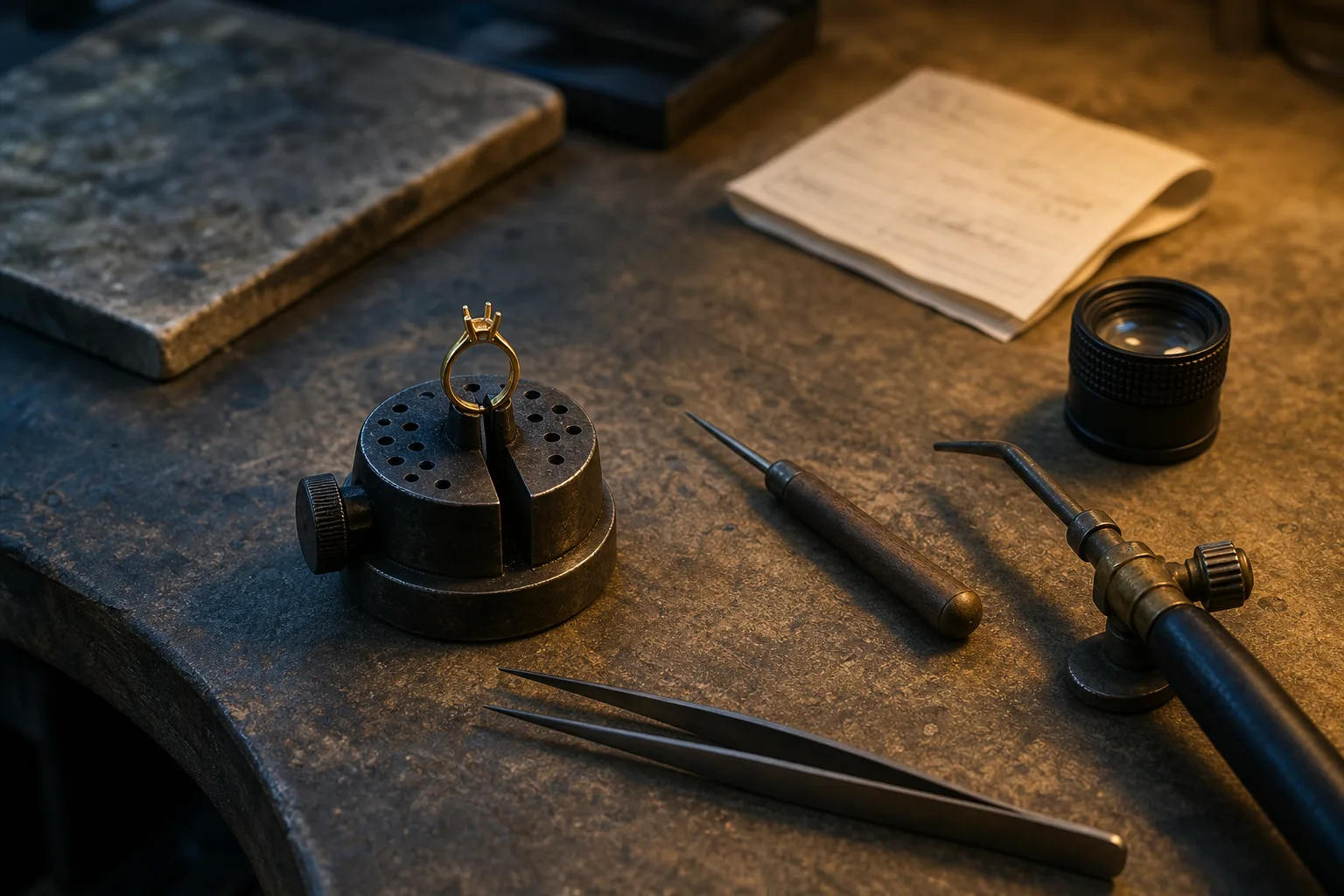
The first time you hand a ring across a counter, the quote tends to arrive in a shape you were not expecting. You asked to go down a half size, which sounds like a small subtraction of metal, and the number you get back has almost nothing to do with the gold that comes out. It reflects heat, construction, and risk to the stones, in roughly that order. Understanding which of those three is driving your particular quote is the difference between a fair price and a puzzling one, and it is also the difference between a repair worth doing and one worth declining.
The assumption that a resize is mostly a size change
Most first-time customers picture a saw cut, a squeeze, and a seam. That happens, but it is the smallest part of the job. The bench worker has to bring the shank to soldering temperature without cooking anything nearby, which means assessing every stone in the piece before a torch comes near it. Diamonds tolerate heat reasonably well; emeralds, opals, pearls and most treated or oiled stones do not, and neither do some modern lab-grown color stones. If the setting cannot be protected with heat sinks and shielding, the stones come out first and go back after, and that unsetting and resetting is where the labor sits.
Construction matters just as much. A plain gold band is straightforward. A shank with channel-set stones running most of the way around, an eternity band, or anything in platinum, titanium, tungsten or stainless behaves differently at the torch or cannot be sized at all. Tungsten and most ceramic rings are not sized; they are replaced. Platinum needs a much higher working temperature and a different solder, which is why a platinum resize is quoted higher than an identical piece in yellow gold even when the metal removed is trivial in value.
Which damage earns the repair and which does not
The useful question a first-timer can ask is whether the damage is structural or cosmetic, because those two categories are priced and prioritized in opposite directions. Worn prongs are structural. When the tips flatten and the stone begins to rock under a fingernail, you are one snag away from losing it, and retipping four prongs costs a fraction of replacing a center stone. A thin shank is structural too. Once the band has worn to roughly half its original thickness at the bottom, it will crack rather than bend, and a shank replacement done before the break is a cleaner and usually cheaper operation than a rescue afterward.
Surface scratching, dulled polish and light dents are cosmetic, and each polish removes a little metal permanently. A ring worn daily and polished every year will thin faster than one polished every five. Chipped stones sit in between: a small chip hidden under a prong can often be left alone indefinitely, while a chip at the girdle creates a stress point that spreads. A good bench will tell you which of your complaints is a clock ticking and which is simply the look of something that has been worn.
The exposures that would actually concern a doctor
Almost everything alarming in jewelry chemistry belongs to the person at the bench rather than the person wearing the piece. Soldering produces metal fumes, pickle baths are dilute acid, and older repair solders sometimes contained cadmium, which is why reputable shops now buy cadmium-free alloys and run ventilation over the bench. The Occupational Safety and Health Administration oversees workplace exposure to metal fumes and solvents of exactly this kind, and a shop with a working hood and a tidy pickle pot is telling you something about its standards generally.
The wearer's real exposure is nickel. White gold is yellow gold whitened with alloys, and nickel-based white gold sits directly against skin under a ring where sweat and friction are constant, which is the classic setup for allergic contact dermatitis: itching, a red band, sometimes weeping skin. If that has ever happened to you, say so before the work is scheduled, because palladium white gold and platinum avoid it entirely, and a rhodium plate over nickel white gold only postpones the problem until the plating wears through. Older costume and vintage pieces can also carry lead, which matters most in households with young children.
Damp, dust and the storage that does damage between visits
A surprising share of the repairs that come across a counter were caused by where the piece lived rather than how it was worn. Basements and unheated closets hold humidity, and humidity is what corrodes silver, lifts the finish on antique settings and grows mold on the silk cord of a strung pearl necklace and on leather watch straps. Pearls and opals also need some ambient moisture and crack in an aggressively dry safe, so the goal is a stable middle rather than an extreme in either direction. A closed box in a lived-in room, kept off exterior walls, solves most of this.
Home cleaning causes the rest. Chlorine bleach attacks the alloys in gold and will eventually make a shank brittle enough to snap, and ammonia dips do real harm to porous and treated stones. Warm water, mild dish soap and a soft brush handle household dust and skin oils without any of that risk.
Getting a first quote you can actually compare
Ask for the estimate in writing, itemized by operation rather than as one number: unset and reset, size, retip, polish. Ask what happens if a stone breaks during the work and who carries that loss, ask whether the piece leaves the premises for a trade shop, and get a written description of what you handed over, including stone counts. If the piece is insured on a scheduled rider, tell your carrier when a significant repair changes the appraisal.
A first repair is mostly an audition. The shop that explains why your particular ring is priced the way it is has told you enough to bring back the next one.