Fall Market Labels: Which Claims Are Just Words and Which One a Doctor Actually Reads
At the autumn farm stand, most of the signage is decoration, one warning statement is regulated, and the people standing nearby can tell you which is which.
Joaquin Salcedo·3 min read·779 words
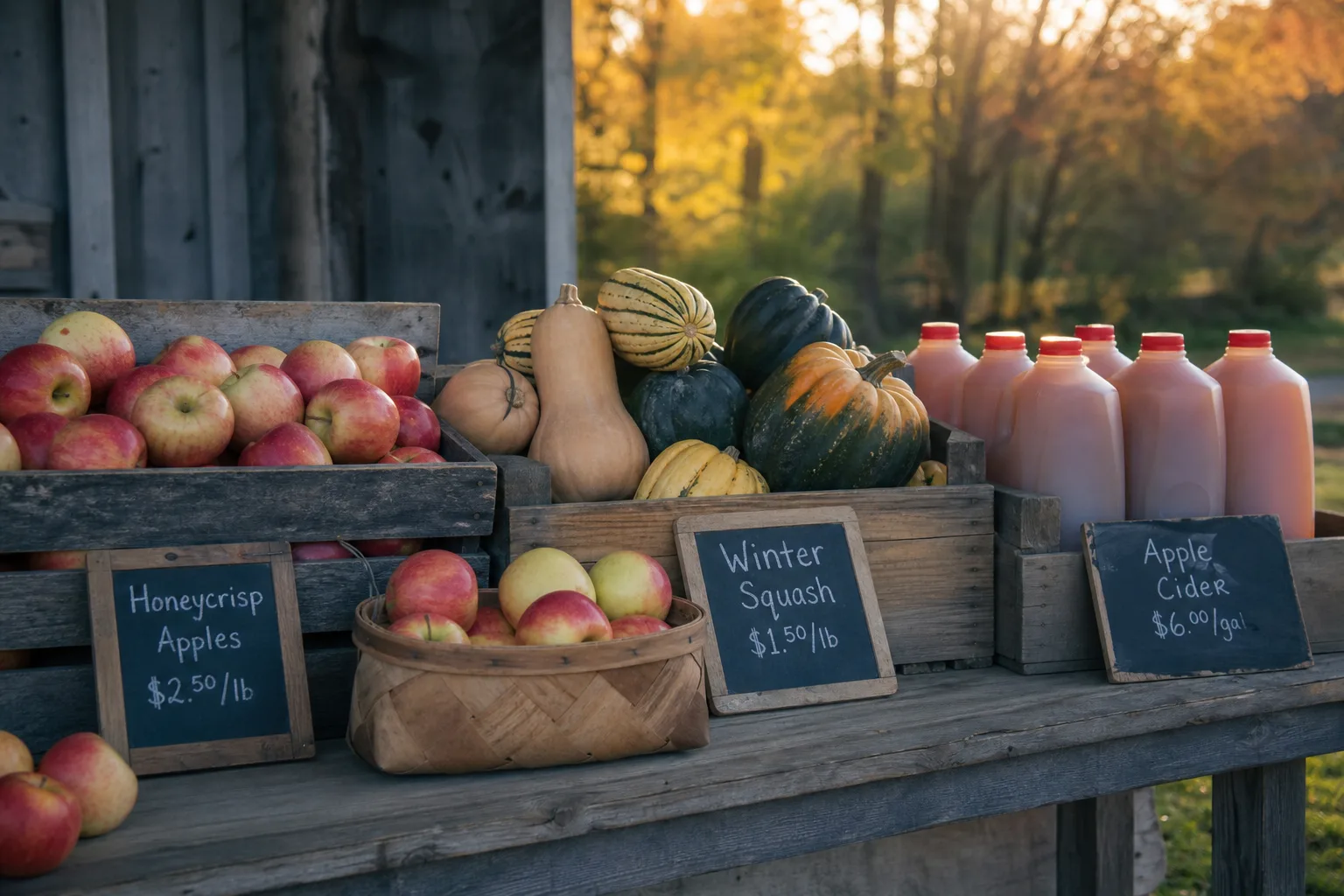
By the second week of October the signage at a farm stand has multiplied. Chalkboards announce that the squash is local, the cider is fresh-pressed, the greens are no-spray, the apple butter is all natural and the syrup is Grade A. Almost none of those phrases carries a fixed legal meaning, and the ones that do carry meaning are usually set not by the seller but by a market rulebook, a state agriculture department, or a county health office that never appears on the sign. Knowing which office wrote which rule is the difference between reading a label and guessing at one.
The market manager wrote the definition of local, and it is a number
Most farmers markets that describe themselves as producer-only publish a radius, a set of counties, or a state line, and a vendor who sells outside it loses the stall. That radius is a local rule in the plain sense: a market two towns over may draw the circle wider, allow resellers on a labeled table, or permit produce trucked in from a neighboring state during a thin harvest week. The word local on the sign tells you almost nothing. The market's posted vendor policy, which is usually a page on its website or a laminated sheet at the manager's table, tells you the whole thing. Ask the manager which category a given table falls into.
No spray and chemical free are claims nobody is checking at the table
Certified organic is an audited status with an annual inspection and a certifying agent whose name a farmer will give you without hesitation. No spray, pesticide free and chemical free are not audited by anyone, and the last of those is discouraged outright in organic labeling because it is not a condition any farm can honestly meet. State departments of agriculture do license and inspect scale accuracy, egg grading, dairy handling and processed food production, so a vendor selling jam or hot sauce is operating under a permit that a vendor selling loose kale is not. The inspector's remit is narrower than the chalkboard suggests, and knowing its edges saves you from reading meaning into words that carry none.
The cider warning is the exception, and the rules differ by state line
Unpasteurized juice sold at retail carries a required warning statement about the risk to children, older adults and people with weakened immune systems, and the Food and Drug Administration is the agency responsible for that labeling requirement. Many states let a cider mill sell untreated juice directly at the farm or the market under an exemption, sometimes with a posted placard instead of a printed label, which is why the same jug can look differently marked forty miles apart. This is the one autumn claim I would not skim. If someone in the household is pregnant, under five, over sixty-five or on immunosuppressive therapy, the pasteurized jug is the one to carry to the car.
Mold is the fall exposure worth attention, and no sticker reports it
The health question I get asked in October is about pesticide residue, and the answer I give is about mold. Fruit bruised in a bin, stored damp, and pressed anyway can carry patulin, a mold byproduct that concentrates in cider, and squash held in a humid cellar develops soft spots that spread inward well past what a knife removes. Firm fruit, dry stems, cool and ventilated storage at home, and a willingness to throw out the questionable one are worth more than any claim on the crate. Cut mold off hard cheese and firm cabbage; discard soft fruit, bread and any pressed product entirely.
Three people who will answer the question the label does not
The market manager knows the vendor radius and whether a table is producer-only. The county health department sanitarian, who permits the cider stand and the sampling table, knows what treatment is required in that jurisdiction and what an exemption placard is supposed to say. The cooperative extension food safety educator, based at the land grant university in your state, publishes the storage and canning guidance for your actual climate, which matters because a root cellar in a humid river valley behaves nothing like one in high desert. All three answer questions from the public as part of the job, and all three are faster to reach than most people expect.
Autumn is the season when the signage gets most enthusiastic and the underlying rules get most local, which is a workable combination once you know that the chalkboard is marketing and the warning statement is law. Read the fruit, read the jug, and ask the person whose permit is on the wall.